Eden Krause · 2 September 2026
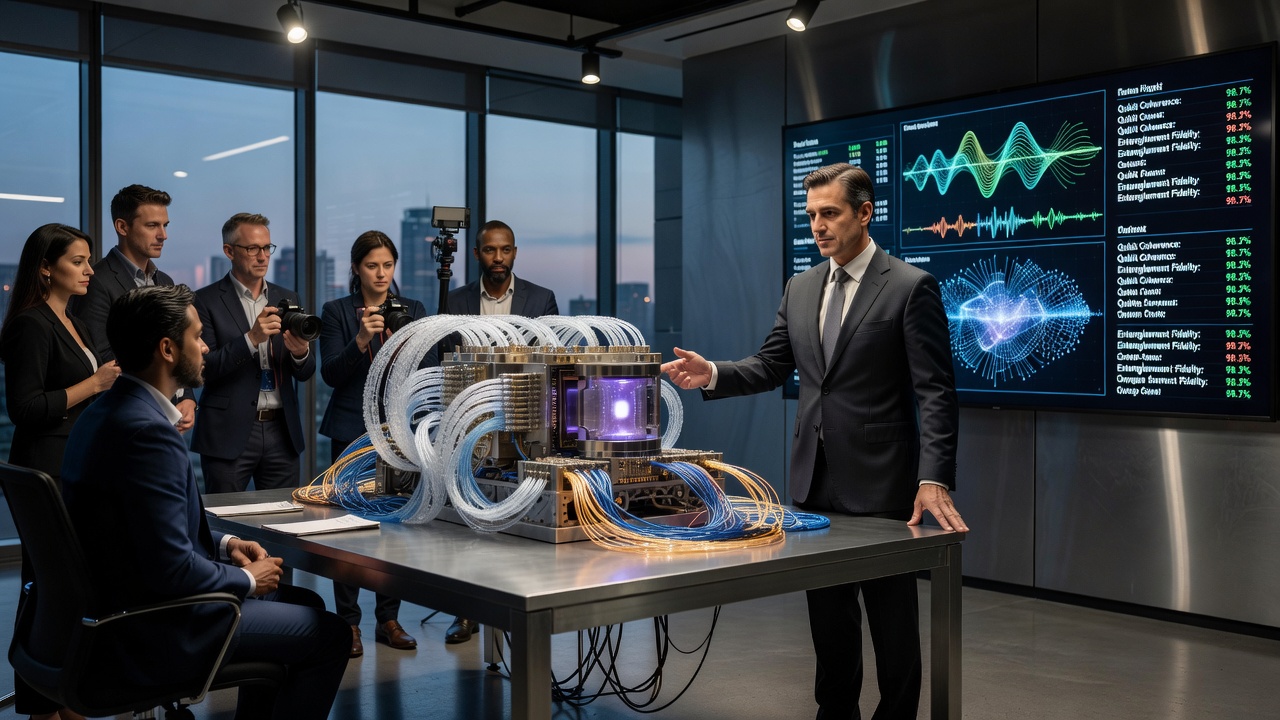
Core Laboratory Research has introduced a quantum simulation platform to support advanced physics investigations. The system enables modeling of intricate quantum interactions that remain challenging to examine through conventional experimental setups. Researchers gain access to computational resources optimized for high-fidelity quantum state evolution.
Platform Capabilities
The platform accommodates simulations involving up to one hundred qubits while incorporating noise models that replicate realistic laboratory conditions. Machine learning components assist in parameter optimization and allow real-time visualization of wave function dynamics. Access occurs via a secure interface or API connections that integrate with existing laboratory scripts. Benchmarks demonstrate substantial reductions in computation time compared with prior methods, supporting larger system sizes. Modules address quantum many-body problems, entanglement analysis, and approximations drawn from quantum field theory.
Staff training programs ensure effective use of the new infrastructure. The development spanned two years and combined expertise from physicists, software engineers, and hardware specialists. National grants dedicated to quantum technologies provided the necessary funding.
Research Implications
Scientists can now validate theoretical predictions in controlled virtual environments prior to physical trials. This approach is projected to shorten experimental cycles and improve resource allocation across ongoing projects. External collaborations may expand once access protocols for partner institutions are finalized. Planned enhancements include quantum error correction modeling and direct interfaces with emerging quantum hardware. The platform positions Core Laboratory to contribute to progress in condensed matter studies and quantum information science through reproducible, scalable simulations.