Greta Peters · 16 September 2026
Open Repositories Play Central Role in AI Safety Amid Evolving Regulatory Landscapes
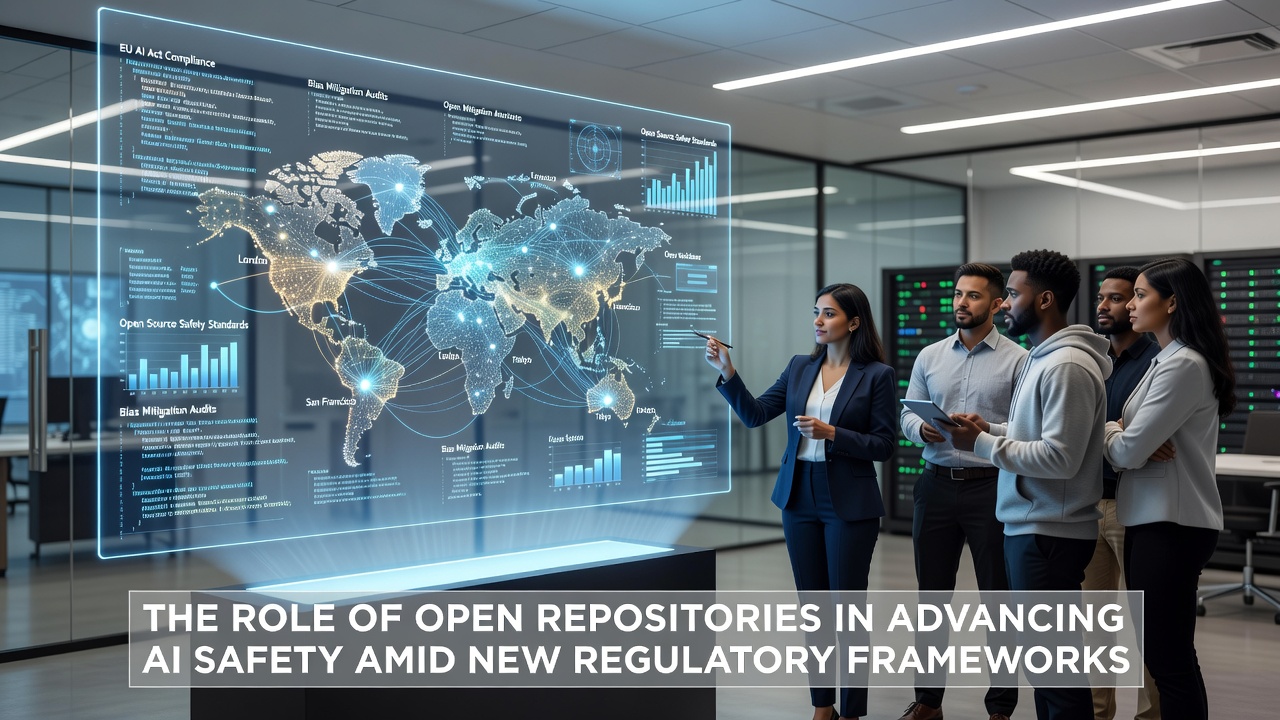
Regulatory frameworks for artificial intelligence continue to expand across multiple jurisdictions, and open repositories now function as essential infrastructure for compliance and safety verification. These platforms host datasets, model weights, evaluation benchmarks, and safety documentation that developers and auditors rely upon when demonstrating adherence to emerging rules. Governments in the European Union, the United States, Canada, and Australia have each introduced or updated requirements that emphasize transparency, risk assessment, and ongoing monitoring of high-impact AI systems.
Regulatory Developments Shaping Repository Use
The EU AI Act, which entered into force in stages beginning in 2024, mandates that providers of high-risk AI systems maintain detailed technical documentation and allow access to certain information for conformity assessment bodies. Similar provisions appear in the NIST AI Risk Management Framework updates released in 2025, which encourage voluntary but widely adopted practices for sharing evaluation results. In Canada the Artificial Intelligence and Data Act requires impact assessments that often draw on publicly available test sets hosted in open repositories, while Australian guidelines on responsible AI issued by the Department of Industry, Science and Resources reference the need for reproducible safety metrics.
By September 2026 several of these frameworks will reach key implementation milestones. The EU will complete its first round of notified body accreditations for AI auditors, and the United States will finalize reporting templates under an expanded executive order on AI safety. These deadlines have prompted organizations to deposit safety-related artifacts into open repositories so that third-party reviewers can examine them without requiring direct access to proprietary environments.
How Repositories Facilitate Safety Practices
Open repositories enable standardized evaluation by providing consistent versions of datasets and benchmarks that multiple parties can reference. When a developer uploads a model card alongside performance metrics on bias, robustness, and adversarial resistance, regulators and independent researchers gain the ability to replicate claims. This shared resource reduces duplication of effort and creates a verifiable trail that supports audit processes.
Repositories also support red-teaming exercises. Security researchers and academic groups upload adversarial prompts, failure cases, and mitigation strategies that others can build upon. One study coordinated across several universities demonstrated that collaborative use of a public safety benchmark reduced the time required to identify high-risk failure modes by nearly forty percent compared with isolated testing.
Challenges and Technical Responses
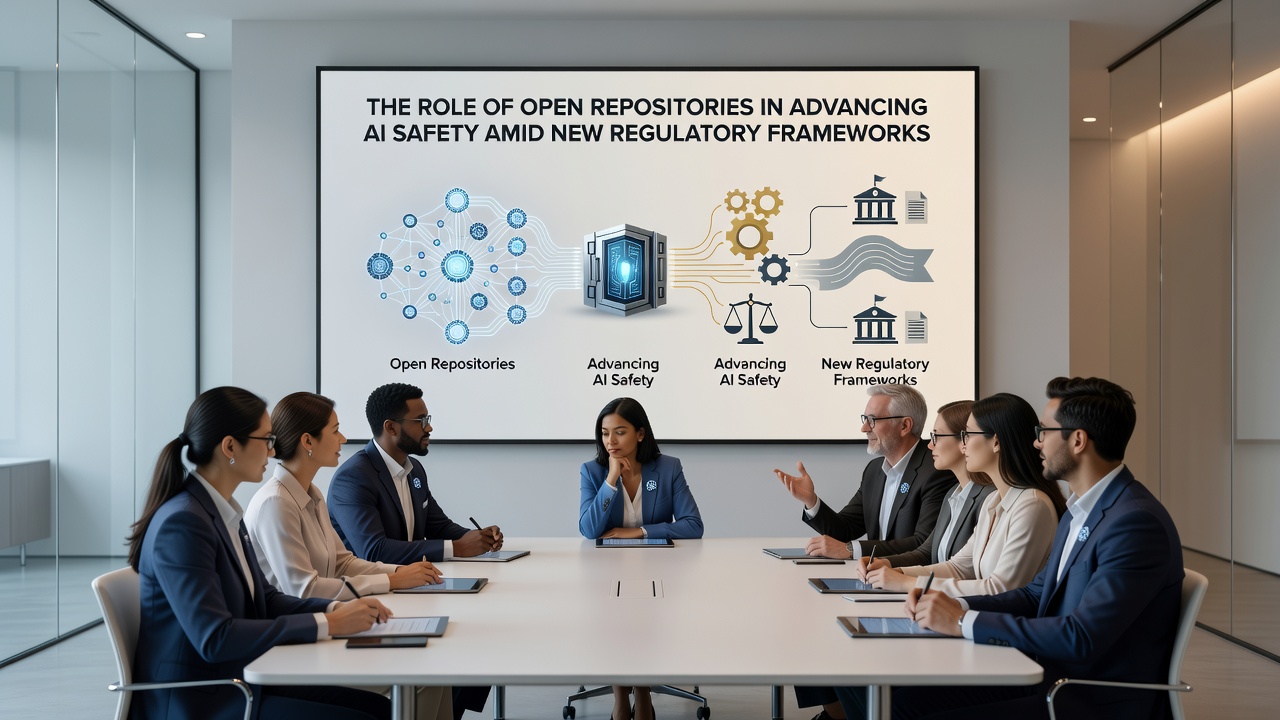
Despite these advantages, open repositories face practical constraints. Large-scale models generate substantial storage and bandwidth demands, and some safety evaluations require compute resources that exceed typical repository hosting capabilities. In response, several platforms now integrate with external evaluation services that run standardized tests on remote infrastructure and return results directly to the repository record.
Version control remains another focus area. Regulators need assurance that the model or dataset under review matches the one described in submitted documentation. Cryptographic hashing and signed manifests, already implemented in major code repositories, are being extended to AI artifacts so that auditors can confirm integrity across updates.
International Coordination Efforts
Cross-border alignment of repository standards has gained momentum. The Global Partnership on AI, which includes members from North America, Europe, and the Asia-Pacific region, published a set of recommended metadata schemas in early 2026 that map directly onto both the EU AI Act and the NIST framework. These schemas specify fields for intended use, known limitations, and safety testing protocols, allowing a single repository entry to satisfy multiple regulatory jurisdictions.
Industry consortia have contributed complementary work. The Partnership on AI and the MLCommons organization maintain working groups that define benchmark suites and publish results under open licenses. Their outputs feed into repository collections that auditors consult when reviewing compliance claims.
Conclusion
Open repositories have become integral to the operationalization of AI safety requirements across different regulatory environments. By hosting standardized artifacts, supporting reproducible evaluations, and enabling coordinated red-teaming, these platforms help organizations meet documentation and transparency obligations while accelerating collective understanding of model risks. As implementation deadlines approach in September 2026 and beyond, the infrastructure provided by open repositories will continue to underpin verification processes that span national boundaries.